
How Foster Carers Help a Child Build Emotional Resilience
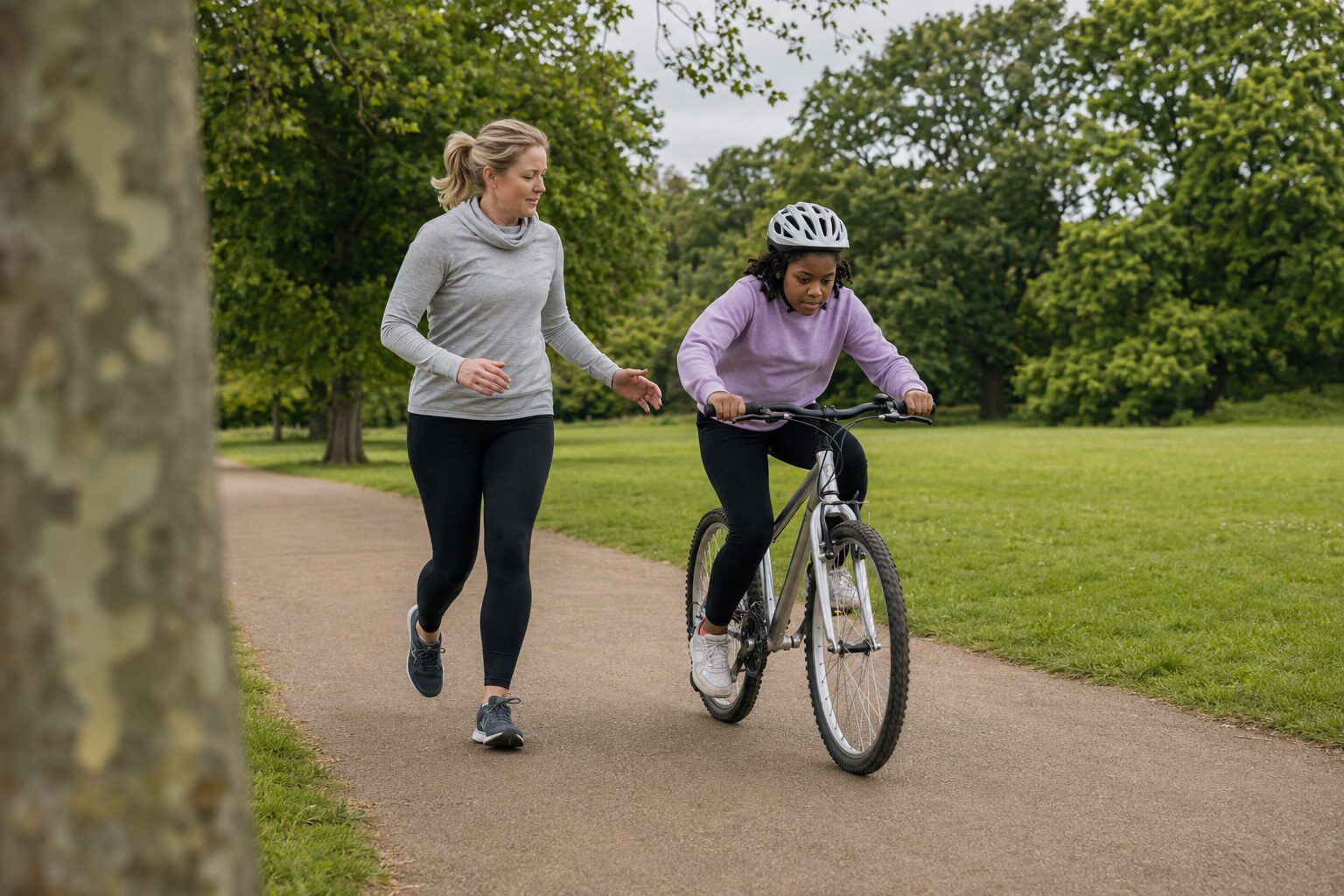
You cannot toughen a child up. If anyone tells you resilience means taking knocks without flinching, be sceptical. It is quieter than that: the person a child tells when the day goes wrong, the way their breathing settles again, the sense that tomorrow is worth turning up for. Here is how carers build it at home, on ordinary Tuesdays, without a qualification in anything.
Please note: this is general information for foster carers, not advice about a particular child. Figures are correct at 1 September 2026, from the Department for Education’s Children looked after in England release of 26 November 2025. If you are worried about a child’s mental health, talk to your supervising social worker and the child’s GP.
What resilience actually is, and what it is not
The psychologist Ann Masten spent forty years studying children who did well after hard starts, and called her book on it Ordinary Magic. Her finding was deflating in the best way. The children who came through were not unusually tough or unusually gifted. They had ordinary things working in their favour: an adult who stayed, a routine that held, a school that noticed when they went quiet.
The opposite idea is still everywhere. People say a child has resilience or has not got it, as though it were eye colour. It is closer to fitness: it goes up and down, and it can be built at any age. In practice it looks like this:
- knowing which adult to tell when something has gone wrong
- being able to put a rough name to a feeling
- having a body that comes back down after a fright
- having something they know they are good at
- a working belief that effort sometimes changes the outcome
Why it matters for a child who has come into care
On 31 March 2025 there were 81,770 children in care in England, 67% of them living with foster carers. The Department for Education asks carers to complete a Strengths and Difficulties Questionnaire for children aged five to sixteen; the average score that year was 14.9, and 42% scored in the range flagged as a cause for concern. An average tells you nothing about the child asleep in your spare room. Some have been coping alone for years, which looks like resilience and is closer to exhaustion.
What they share is an internal alarm system that has had a lot of practice. A child who has lived with trauma and unpredictable adults learns to read a room fast and stay ready. Sensible in an unsafe house. Costly in a safe one, and much of your work is giving that alarm enough boring evidence to stand down.
The finding that keeps coming back
Harvard’s Center on the Developing Child reviewed decades of research on why some children do well after serious hardship and landed on one sentence: they “have had at least one stable and committed relationship with a supportive adult”. Not a therapist. Not a programme. One adult who keeps turning up.
Carers find that hard to believe, because it sounds too small to count. You made the same breakfast for eleven weeks. You collected her from swimming when you said you would. You did not go anywhere the week she was horrible to you. In resilience research, that is the intervention.
Four everyday habits that build it
Our carer training breaks the practical side into four areas. None need time set aside. They work best folded into what you were doing anyway.
Naming feelings. Children who can label what they feel manage it better, and many arriving in care have never been asked. A magnet scale on the fridge door works, or your own running commentary at the kitchen table: “I was so wound up in that traffic I nearly cried at a roundabout.” You are showing them a feeling can be said out loud and the sky stays up.
Settling the body. Distress is physical before it is anything else. Breathing out for longer than they breathe in works, and so does squeezing and releasing each muscle from the toes upward. Practise on a calm Sunday, never for the first time mid-meltdown. Our guide to helping a child manage anxiety has more on this.
Noticing what went right. Not a gratitude journal. Closer to a habit at Sunday dinner where everyone names one good thing from the week, and yours is allowed to be that the bus came immediately. A child who scans for threat automatically gets practice at scanning for the other thing.
Chances to be good at something. Confidence is not built by being told you are wonderful. It is built by getting a swimming badge, or by being the one who feeds the cat and does it properly. Find the thing this child could get good at within a few months, then protect the time for it, even when school reports are the loudest thing in the house.
What does not help
Some of the standard advice is worse than useless. Telling a child they are resilient backfires, because it quietly instructs them not to bring you the hard stuff. So does rushing in with “you’re fine, don’t worry” when they are plainly not fine. A child works out fast whether their distress makes an adult uncomfortable, and one who decides it does will stop showing it to you.
Then there is the version of resilience used against children: because a young person has survived a lot, they need less. A professional says “she’s incredibly resilient” in a review meeting, and what it means in practice is that nobody is funding anything. Push back on that. Coping is not the same as being fine, and the child who never asks for help is usually the one to worry about. Our piece on therapeutic parenting and PACE has the frame that makes this easier to hold.
Your own steadiness is part of the picture
There is good UK evidence here, and it beats the usual line about oxygen masks. The Reflective Fostering Programme, developed by the Anna Freud Centre and tested with 524 foster and kinship carers across England and Wales, was reported in Adoption & Fostering in 2026. Its main measure was children’s emotional and behavioural wellbeing after twelve months, and on that it found no meaningful difference between the two groups.
The carers changed a lot. A year on, those who did the programme reported significantly lower burnout, lower distress in the parenting role and less secondary traumatic stress, and they were measurably more curious about what was going on inside their child. Read honestly, that says the thing you can reliably shift in a year is your own capacity, and given how long children stay with carers who are not burnt out, that is no consolation prize. The NHS five steps to mental wellbeing are worth stealing for yourself as much as for the child: connect with other people, be physically active, learn new skills, give to others, and pay attention to the present moment.
When to ask for more help
None of this replaces proper mental health support, and knowing where the line sits saves months. Tell your supervising social worker if you see:
- a low mood or high anxiety that has lasted several weeks rather than a bad fortnight
- them dropping the things they used to enjoy
- sleep or appetite changing sharply and staying changed
- school telling you something different from what you see at home
- any mention of self-harm, which is a same-day conversation, not a wait-and-see
The GP and the annual health assessment are both routes in. The YoungMinds Parents Helpline is free on 0808 802 5544, open 9.30am to 4pm on Monday, Thursday and Friday, until 6pm on Tuesday and Wednesday, with a weekday webchat. Our article on supporting a child’s mental health covers the referral routes.
You won’t have to do this alone
All of this is easier with someone experienced at the end of the phone, which is what a supervising social worker is for. At Greater London Fostering you get one who knows your household rather than a rota, an out-of-hours line for when it goes wrong at nine o’clock, and other carers who have already had the week you are having. Ofsted inspected us from 21 to 25 July 2025 and rated us Outstanding in all three judgements.
The money is straightforward, because it should be. We pay 479.50 pounds a week for a child under 11 and 507.50 pounds a week for a child aged 11 or over, per child, for as long as they live with you, with an enhanced fee of roughly 100 to 200 pounds a week more where a child needs a higher level of care. One weekly figure, no one-off payments to chase. Our guide to becoming a foster carer walks through what happens next.
It is completely normal to read a page like this and think you would not know where to start. Nobody does at first. The carers who are best at it learned in their own kitchens, while getting things wrong.
Fancy an honest chat about whether fostering could work for you? No pressure, no obligation.
Or read more about the support foster carers receive.
Frequently asked questions
Can you really teach a child to be resilient?
You cannot teach it as a lesson, but you can build the conditions for it, and those conditions are mostly relationships and routine. Ann Masten’s phrase is “ordinary magic”: children come through hard starts because normal protective things were working, not because they were exceptional. A steady adult and a predictable week beat any resilience worksheet.
My foster child falls apart over small things. Does that mean they are not resilient?
Usually the opposite of what you fear. A child who lets go over a burnt piece of toast has often decided your kitchen is safe enough to let go in. Children who have been managing alone hold everything in at first, and the wobbles start when they relax. Uncomfortable, and generally a good sign.
Do I need special training to do this?
No. Every foster carer with us does Skills to Foster before approval and plenty of training afterwards, including trauma and therapeutic parenting, but nothing here needs a certificate. It needs someone at home who is consistent, and a supervising social worker to think it through with.
Does building resilience mean a child needs less support?
No, and worth saying in review meetings. A young person who copes well still needs the same help and the same adults paying attention. Resilience is what somebody has because of the support around them, not a reason to take support away.