
Child Development in Foster Care: What to Expect and When to Ask
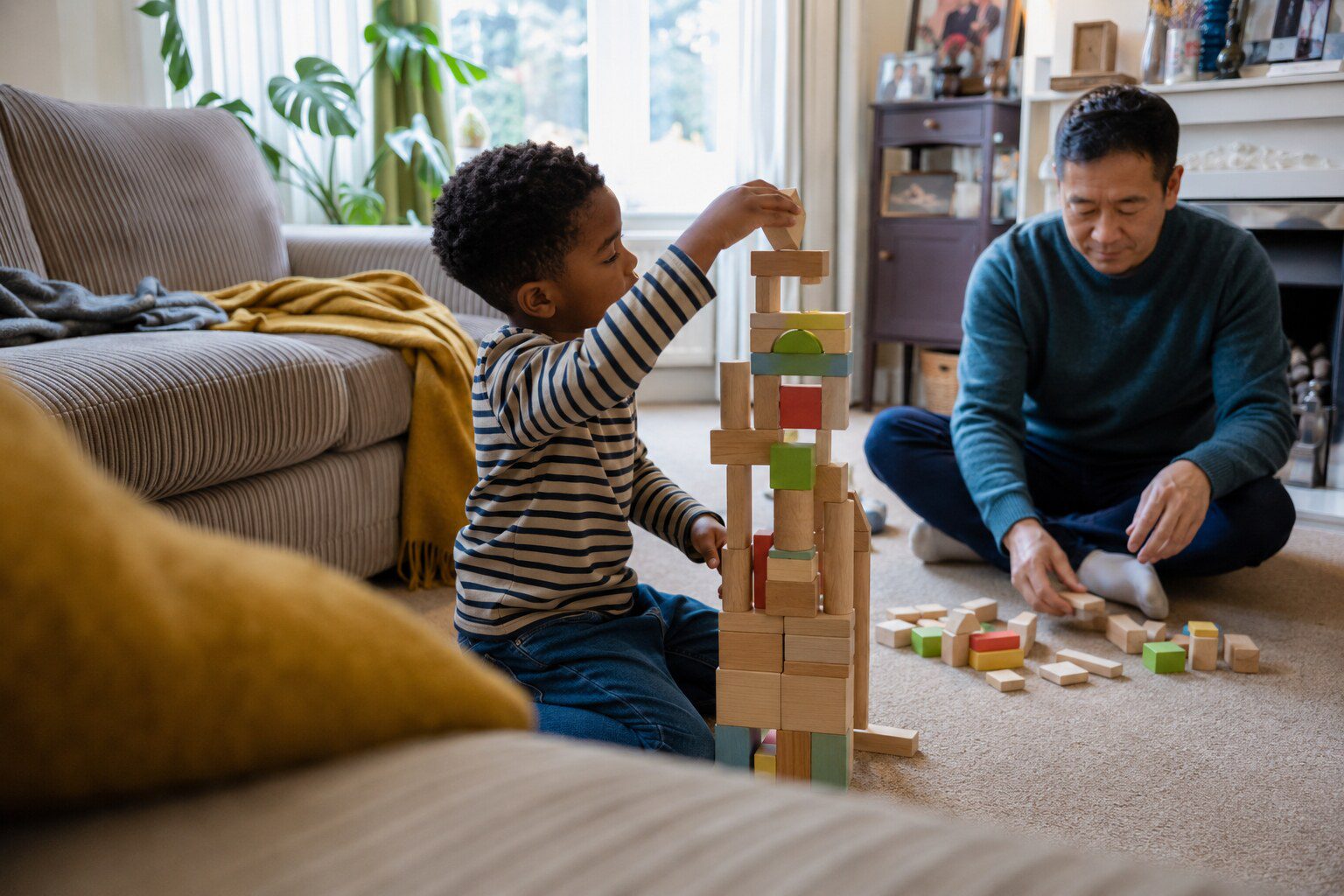
Nobody hands you a chart when a child moves in. You get a bag, a folder with gaps in it, and a small person either further ahead or further behind than the paperwork suggested. Then one evening you find yourself wondering whether a four-year-old should be able to hold a pencil properly, or a nine-year-old should still want the landing light left on. Here is the rough shape of what usually happens when, and who to tell when something does not look right.
Please note: general information about child health and development in England, not advice about any particular child. Correct at 4 September 2026. Health check and vaccination timings come from the NHS. If you are worried about a child in your care, speak to your supervising social worker and their GP.
A milestone chart is a net, not a scorecard
Every list of milestones is built from averages, and no real child is average. Two brothers raised in the same house will walk months apart and neither is doing it wrong. Knowing roughly when things happen is not about grading a child. It is about catching what responds well to early help, like hearing loss and delayed speech, at the age when doing something is easy rather than hard. A net, not a test paper. Nothing below is a deadline, and a child who gets there late is not failing.
The rough shape of the first few years
Ranges are wide on purpose. Health visitors talk about what most children do by a given age, which is a different thing from what all children do.
- Around 8 weeks: a first social smile, aimed at a face rather than the ceiling.
- 4 to 6 months: sitting up without being propped, and a lot more noise.
- 7 to 9 months: crawling, and real distress when a familiar adult leaves the room.
- 10 to 12 months: first steps, a pincer grip, and words used on purpose rather than at random.
- 13 to 18 months: walking confidently, turning pages, a handful of clear words.
- 19 to 24 months: scribbling with a crayon, then short sentences.
- 2 to 3 years: made-up games with props, pronouns used correctly, toilet training under way for most.
- 3 to 5 years: writing their own name, stairs without help, telling you what happened at nursery, picking particular friends.
- Early primary: sounding out words, catching a ball, being understood by strangers rather than only by you.
- 9 to 12 years: grammar that sounds adult, and the beginnings of thinking about how someone else feels.
Developmental age and the number on the birthday card
This is the part the charts do not tell you, and it matters more than all of them put together. A child who spent their early years frightened or moved around does not develop in a straight line. The parts of the brain that handle language and self-control need a calm adult nearby to build properly, and a child who did not get that arrives with those parts underbuilt. So you get a ten-year-old who reads well but falls apart at the school gate like a five-year-old, or a teenager who cooks a meal competently then cannot manage a change of plan. Our guide to trauma and attachment goes into why that happens.
Respond to the developmental age rather than the candles on the cake and most of the trouble drops away. Sitting with a nine-year-old while they clean their teeth is not babying them if nine-year-old independence is beyond them this month. Expecting the birthday number is how a reasonable evening turns into a row. Much of what gets read as a child having trouble coping is really a mismatch between what we asked for and what they could do that day.
And children do catch up. The strongest evidence comes from a randomised study led by Charles Nelson and Charles Zeanah, published in Science in 2007, which followed young children moved out of Romanian institutions into family foster care. Their cognitive scores improved against the children who stayed, and the effect was largest for those placed youngest. Ordinary family life did that. Not a programme: meals, bedtimes and an adult who came back.
The checks that happen anyway, and the extra ones your child gets
Children in care get more health oversight than other children, one of the few advantages the system hands you. Knowing the dates means you can chase them, because in a busy borough they do slip.
- A full physical examination within 72 hours of birth, and a weight check that first week.
- A health visitor’s new baby review within 10 to 14 days of the birth.
- A thorough check at 6 to 8 weeks, usually done by a GP.
- A review between 9 and 12 months, covering language and learning, diet, safety and behaviour.
- A health and development review between 2 and 2 and a half years, alongside the progress check nursery does at the same age.
- Vaccinations at 8, 12 and 16 weeks, at 1 year, at 18 months and at 3 years 4 months. The 18-month appointment is new from 1 January 2026 and the second MMR has moved into it, so a child that age now needs a booking that did not exist in 2025.
- An initial health assessment within 20 working days of a child coming into care.
- A review health assessment every six months for a child under five, and every year from five to eighteen.
- A two-year-old in care qualifies for 570 funded childcare hours a year, usually 15 hours a week over 38 weeks, whether or not you work.
That last one is worth a phone call. Nursery is often the most useful thing for a toddler behind on speech, and being in care is the eligibility route, so there is no income test.
What to do when something does not look right
Write it down first, with a date. Not a worried paragraph, just the concrete thing: he did not turn his head when I dropped the pan, she has said no new words since June, he still holds the crayon in his fist at five. Two or three dated notes are worth far more to a GP than a general sense that something is off, and they are the difference between a referral now and one next spring. Tell your supervising social worker the same week, and raise it at the initial health assessment if that is still to come.
After that it depends what you are seeing. Speech and hearing go through the GP or health visitor. Anything showing up in a classroom goes to the school’s special educational needs coordinator, and our guide to supporting a child at school covers how to open that conversation. If it turns out to be a lasting need rather than catching up, caring for a child with additional needs sets out how assessments work. You are not diagnosing anything. You are the person in the room often enough to notice, and noticing is the job.
What actually helps at home
Very little of it costs money, because the things that move a child’s development along are stubbornly ordinary. Talk while you do things, out loud, even when nobody answers: naming the bus, the wet coat, the second sock. Read the same book for the fortieth time, because the repetition is the point. Keep a box of hats and old scarves by the door. Bake something and let them weigh it badly.
London does most of the rest for you. Libraries in every borough run free rhyme times, playgrounds cost nothing, school clubs are cheap. Best Start Family Hubs are opening across the country, with stay-and-play sessions and speech support in one building, due in every council area by 2028. If a child wants to try something and the cost is the obstacle, ask your supervising social worker before ruling it out. Babies are a different case, and if that is where you are starting, our page for baby foster carers and our guide to parent and child fostering are the places to look. You can find the whole picture on becoming a foster carer.
You won’t have to do this alone
None of this is knowledge you are expected to arrive with. Your supervising social worker has sat through a great many of these conversations and can tell you in a minute whether what you are describing is worth a GP appointment or worth watching for a fortnight. Our training covers child development before you are approved, someone answers the phone at three in the morning, and Ofsted rated us Outstanding across the board in July 2025. Carers with GLF are paid 479.50 pounds a week for a child under 11 and 507.50 pounds for a child aged 11 or over, per child, with an enhanced fee of roughly 100 to 200 pounds more where the needs are higher. One fixed weekly payment, so you are not filling in forms every time a toddler needs new shoes.
It is completely normal to have questions, and you need to know none of this before you ring us.
Wondering whether you could do this? Have a chat with us. No pressure, no obligation.
Or read more about the support foster carers get from us.
Frequently asked questions
A child in my care seems behind for their age. Is that permanent?
Usually not, and nobody can tell you in the first month. A lot of what looks like delay when a child moves in is the effect of everything that came before, and it shifts once life becomes predictable. Some of it turns out to be a lasting need that wants proper assessment. Either way the response is the same: get it looked at rather than wait and see.
Who do I tell if I am worried about a child’s development?
Your supervising social worker first, and the GP or health visitor for anything physical, including hearing and speech. If it shows up at school, ask for the special educational needs coordinator by name. Take your dated notes.
Do children in care get extra health checks?
Yes. On top of the ordinary NHS reviews, a child coming into care has an initial health assessment within 20 working days, then a review every six months while under five and every year from five to eighteen. If one has not been booked, chase it.
Do I need to be an expert in child development to foster?
No. You need to be around enough to notice a change and willing to say so. Our training before approval covers the ground, and your supervising social worker handles the referrals with you.