
Fostering an Autistic Child: What Actually Helps
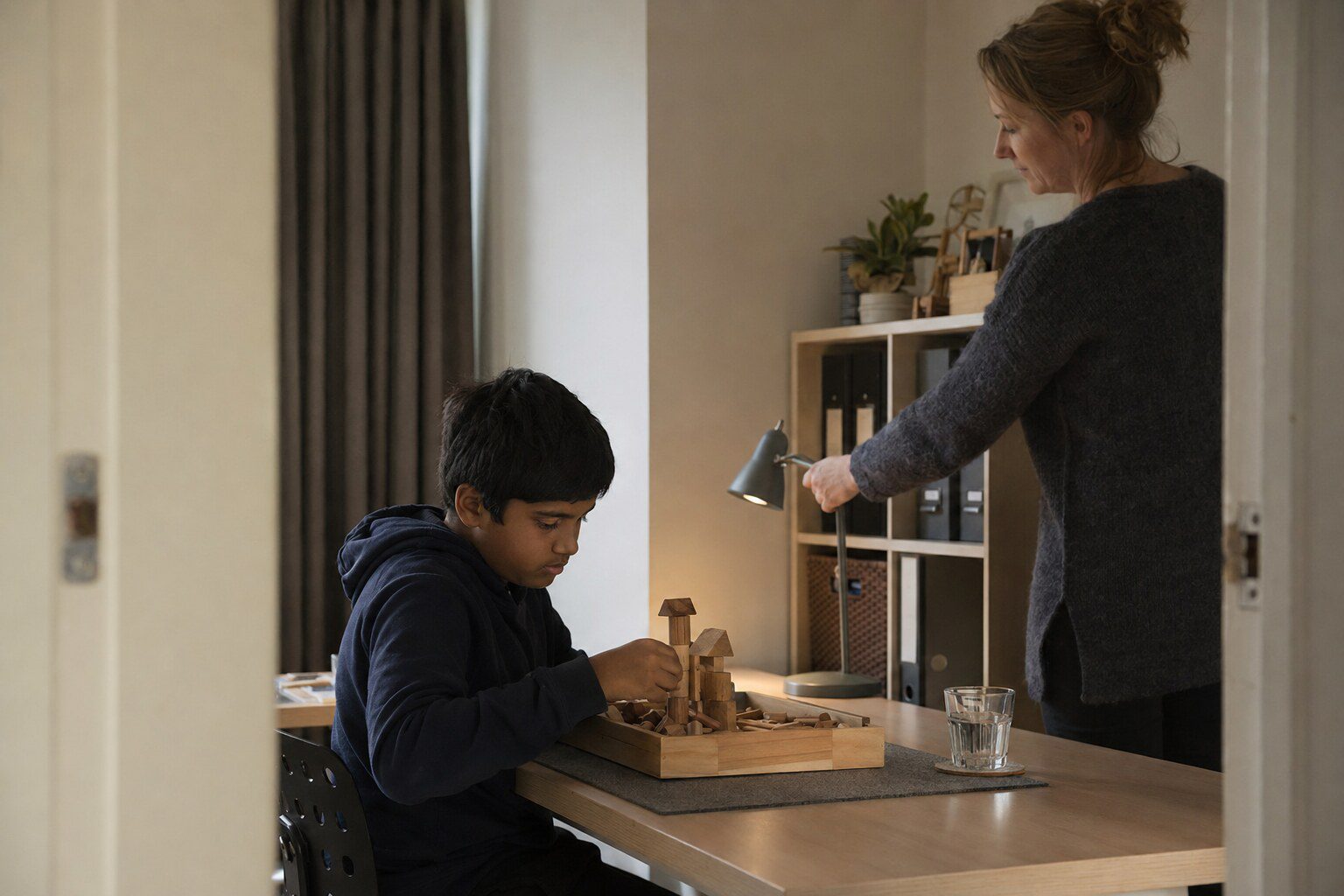
Sooner or later a carer says a version of the same sentence to us, quietly, at the end of a supervision visit: I think something might be going on, but I don’t want to be the one who says it. If you are looking after an autistic child, or one who is waiting a very long time to find out, this is what actually helps. Almost none of it needs a diagnosis or an appointment.
Please note: general information for foster carers, not personal advice about a particular child, and not medical or benefits advice. Figures correct at 15 September 2026. What can be claimed for a fostered child depends on the care plan and the placing local authority, so check with your supervising social worker and with gov.uk.
The wait is the part nobody warns you about
NICE quality statement QS51 says an autism diagnostic assessment should start within three months of referral. The reality is somewhere else. NHS England’s latest waiting time figures, published on 13 August 2026, show 294,792 people in England with an open referral for suspected autism at the end of June 2026, of whom 256,017, or 86.8%, had already been waiting at least 13 weeks. Only 3.8% of that group had been given a first appointment inside the recommended window.
Those numbers cover every age and the NHS publishes them as experimental statistics, but the shape of them is not in doubt. If you are waiting, nothing has gone wrong with your child’s referral in particular.
One of our own older factsheets tells carers to expect a wait of up to six months. It was written in 2022 and is now wrong by a wide margin. Check the date on any sheet that hands you a clinical or financial number.
Your job is not to work out what a child is
Most autism guidance for carers opens with a list of signs to look out for, and ours does too. That is the wrong place to start. Such a list invites you to form a verdict about a child from the outside, and children are very good at noticing when they are being assessed by the person who is supposed to be making their tea. Your job is not to diagnose. It is to be someone safe enough to be told things, and steady enough to be lived with.
What you do instead is write things down plainly. Not “I think he might be on the spectrum”, but: at 4.40pm the fire alarm went off during swimming, he put both hands over his ears, would not come out of the changing room for twenty minutes, and was fine by teatime. A clinician can use that. A home-made verdict is not, and it can follow a child for years.
Raise what you have noticed with your supervising social worker and let the assessment route start where it should, with the GP or the school SENCO. Our guide to fostering a child with a disability or additional needs covers the paperwork side.
What you can do while you are waiting
Here is the part that changes how the wait feels. Support does not wait for a diagnosis. A Department for Education evidence review published in September 2025 says plainly that the strategies which help autistic children in mainstream classrooms work regardless of diagnosis. Nothing below needs a letter from anyone.
- A visual timetable for the day, on the fridge, where it can be seen without asking
- Notice before a change, and a warning before the end of something a child is absorbed in
- Instructions broken into single steps, said directly, without the padding adults add
- Somewhere quiet and dim that is always available, and is never used as a punishment
- Routines that hold when the week is chaotic: same seat, same mug, same order of things at bedtime
Sensory differences, in a real house
Sensory processing is where autism stops being an abstract idea and becomes your Tuesday. The hand dryer in a supermarket toilet. The seam across the toes of a school sock. A corridor strip light that hums at a pitch you cannot hear and they cannot stop hearing. You will not fix any of this and you do not have to. What you can do is stop arguing with it. Seams get cut out. Ear defenders live in the bag. You find out which supermarket runs a quiet hour and you go then, even though it is the wrong end of the bus route. That is not indulgence, it is the same as putting a ramp in.
A meltdown is not a tantrum
This distinction is worth more than anything else here, because the word you use in your own head decides what you do next. A tantrum has an audience and a goal, and it stops when the goal is met or clearly will not be. A meltdown is a child who has run out of capacity: no goal, very little control, and a consequence will not shorten it. Our own 2020 checklist calls this “significant tantrums for no obvious reason”, which is wrong twice over. There is a reason, and it is not a tantrum.
What helps in the moment is less than you think. Fewer words. Less eye contact, not more. Lower the light and the noise if you can, and stay near enough that the child knows you have not left. The talking happens afterwards, sometimes days afterwards, sometimes sideways in the car. Our article on what to do when a child’s behaviour is hard to handle goes further into the after part, and the piece on helping a child manage anxiety is worth reading alongside it. And watch for the shutdowns, the going silent and still, which get missed because they cause nobody any trouble.
School, and what you can actually ask for
You have more standing here than most carers realise. The Department for Education’s January 2026 school census, published on 11 June 2026, counted 538,547 pupils in England with an education, health and care plan, 6% of all pupils, and autism is the recorded primary need for about one in three of them. Your child is not an unusual case at their school, whatever the tone of the phone calls suggests.
Ask what is already in place, in writing. Ask for the sensory adjustments specifically, because they cost almost nothing and schools often have not thought of them: leaving class two minutes early to miss the corridor crush, a pass to go somewhere quiet. A child in care also has a personal education plan and a virtual school head behind them, and our guide to what you can actually ask for at school sets out how to use both. If it turns into a fight about an EHC plan, IPSEA gives free legal advice on special educational needs by booked appointment.
What about PDA?
You will meet PDA, or pathological demand avoidance, within a week of searching online, and almost nobody tells carers the awkward part: it is not clinically recognised. It appears in neither diagnostic manual, there is no standalone PDA diagnosis in the UK, and the National Autistic Society has moved away from endorsing it. Some children do get an autism diagnosis with a PDA profile noted alongside it.
This is where we part company with the people who dismiss it, though. The strategies that grew up around PDA are reasonable on their own terms: drop the demands that do not matter, and ask sideways rather than issuing instructions (“I wonder if the shoes are by the door”). Try them. Just do not walk into a meeting expecting a diagnosis that does not exist.
The money side, briefly
Autistic children sometimes attract Disability Living Allowance, and where a child gets the middle or higher rate of its care component, Carer’s Allowance may be possible too, with fostering income disregarded when that is worked out. Who claims what depends on the care plan and the placing authority, so ask your supervising social worker.
What we can be exact about is what GLF pays. One fixed weekly fee covers both the cost of caring for a child and a reward element for you: £479.50 a week for a child under 11, £507.50 for a child aged 11 or over, paid per child for as long as they live with you. Where needs are higher, an enhanced fee generally adds £100 to £200 a week. We do not do one-off payments for birthdays, because a straight weekly figure is easier to plan a household around.
You won’t have to do this alone
Nobody arrives at this knowing about sensory profiles or EHC plans, and you are not expected to. What we look for is patience and a willingness to change how your house runs. The training comes from us, along with a supervising social worker who knows your household, out-of-hours support at eleven at night, and other GLF carers who have sat in the same SEN meetings. Ofsted rated us Outstanding in all three judgements in July 2025, and carer support was a large part of that.
Outside GLF, the National Autistic Society website is the best written resource going, Autism Central runs free education for carers, and Child Autism UK takes calls on 01344 882248 between 9am and 6pm. One warning: the old NAS helpline number, still printed on many council pages and in our own factsheets, no longer exists.
If any of this sounds like something you could do, have a chat with us. No pressure, no obligation, and no need to know anything about autism first.
Or read more about becoming a foster carer.
Frequently asked questions
Can I foster an autistic child if I know nothing about autism?
Yes. Very few approved carers knew anything about autism before they started, and the ones who do well are the ones willing to change how their home runs, not the ones who had read the most. We train you, and your supervising social worker works through the specifics with you.
Should I be pushing for an autism assessment?
That decision sits with the child’s social worker and the care plan, so raise it with your supervising social worker rather than going to a GP yourself, and bring your written records. Start the practical support now anyway, because the queue is long and none of it needs a diagnosis.
Is it “autistic child” or “child with autism”?
Most autistic people prefer identity-first language, which is why we write “autistic child”, and the National Autistic Society reports that as the majority preference. Some prefer it the other way round. Where the child has a view, the child’s view wins, so ask them.